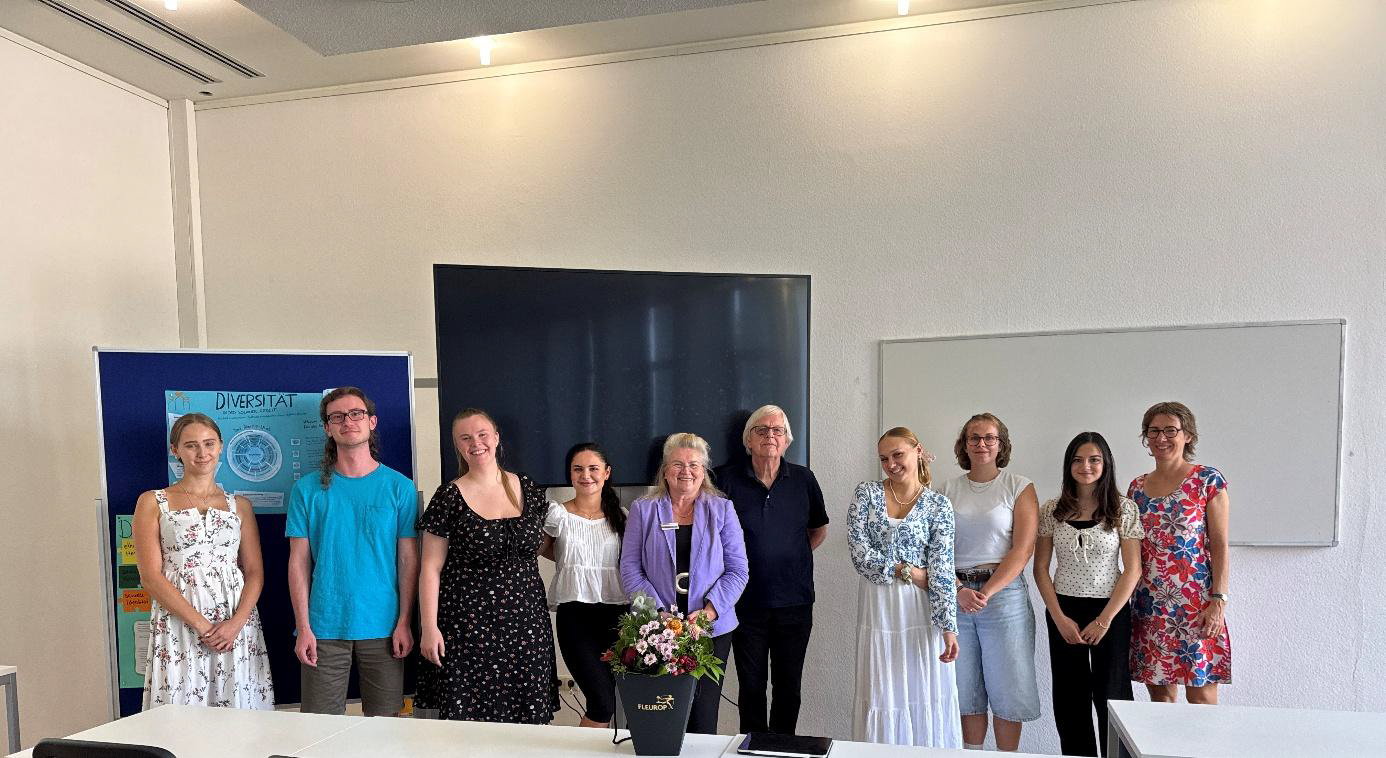
Diversity and social inequality are rarely abstract topics for students of social work — they are the conditions they will meet on their first day in practice. On 6 August, the IU International University of Applied Sciences campus in Karlsruhe turned that observation into a morning of talks, professional debate, and student research at its second Diversity Day. The event, titled "Diversity International", ran from 10am to noon at the Blücherstrasse 20 campus and was free to attend, bringing together IU faculty, students on the dual social work programme, and practice supervisors from partner organisations across the region. It was chaired by Prof. Dr Sabine Bährer-Kohler of IU.
The programme opened with Prof. Dr Jens Rieger of IU, who examined how narratives that call social diversity into question can weaken the promises of equality and participation on which democratic societies rest, and how such pressure is felt most acutely by groups already at risk of marginalisation. His conclusion was addressed squarely at the profession in the room: social work must anchor itself explicitly in human rights, social justice, diversity, and participation, and respond to exclusionary tendencies with professional clarity.
Prof. Dr Marit Cremer followed with "Human Rights and Diversity", setting out why human rights matter for everyday social work practice. Drawing on examples from international social work practice, she illustrated how lived diversity can come under pressure in different national and institutional settings — and asked what professional ethical position social work should take when the conditions around it shift.
Students then took the floor. Lara Katine and Lennert Müller presented "Social Inequality — Social Work — A Theory", introducing social inequality in general terms before deepening the picture through Pierre Bourdieu's sociocultural theory of habitus, capital, and field, and showing how social structures shape access to education and participation. Their talk was accompanied by a poster of their own design.
The morning closed with a discussion round featuring Josef Held, musician and special education practitioner, who witnessed and helped shape the development of special education in Germany and Europe from the late 1970s until his retirement in 2018 — the most senior voice in the room. Further student posters were presented alongside an information table, and the discussion continued well past the programme over a reception organised by the IU Karlsruhe campus team.
The format reflects how the topic is taught at IU: students on the dual social work programme spend a full semester engaging with diversity and social inequality, and the Diversity Day gives that work a public audience — and an audience of practitioners who will supervise them in the field.