
Disinformation and social polarisation rank among the greatest global risks of our time - both are fundamentally mediated through media and communication. Yet until recently, media barely featured on the sustainability agenda. At the Hamburg Sustainability Week 2026, IU helped change that.
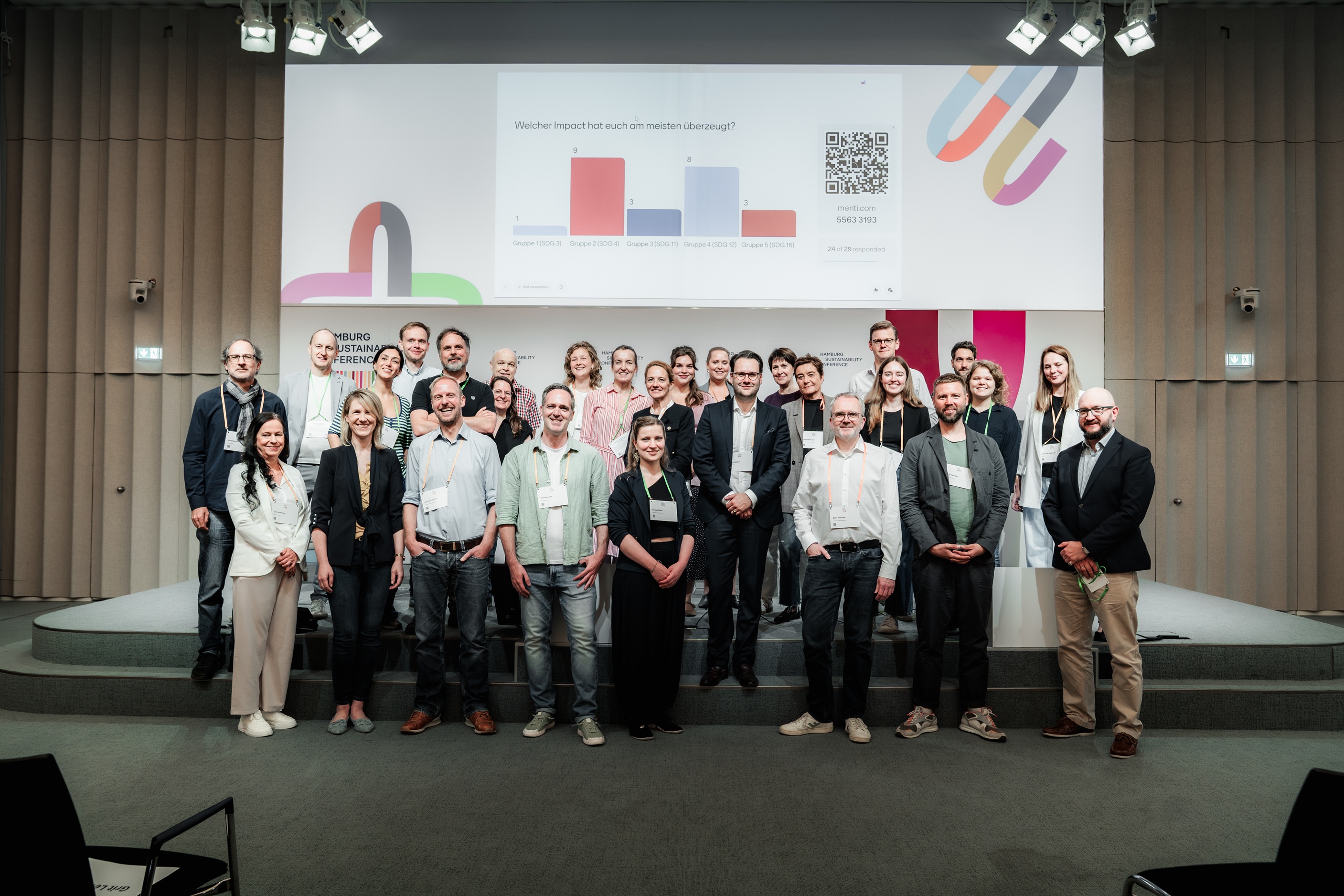
On 1 July 2026, the IU Research Centre for Sustainable Media & Marketing (RCSMM) organised a hands-on workshop at the Hamburg Chamber of Commerce under the title "Hamburg Shaping the Future of the Media Landscape." Experts from business, media, and academia came together to tackle a question that is rarely asked directly: What does media consumption mean for the society we want to build?
Participants - primarily members of the media industry and researchers - were divided into working groups, each assigned one of the UN Sustainable Development Goals (SDGs). Their task was to examine media consumption through the lens of a specific SDG - identifying both the risks it poses and the opportunities it creates in relation to that goal. From there, each group developed concrete, innovative ideas for how Hamburg's regional media ecosystem could act on those findings - turning identified opportunities into reality and reducing the risks.
The session opened with a keynote by Eva Nemela, Executive Board Member of the Körber Foundation, who put the stakes plainly: "The question 'How do I know who I can still believe?' is one of the key questions of our time. When people can no longer answer it, trust in democratic processes and scientific knowledge begins to erode."
.jpg)
Further impulses came from Prof. Dr. Lisa-Charlotte Wolter, who leads the IU RCSMM, and Prof. Dr. Daniel Graewe, Academic Advisory Board member - alongside practitioners from the IU RCSMM's Value Media Board, including representatives from NDR Media, Welect, radiozentrale, teads, RMS, and others.
1.jpg)
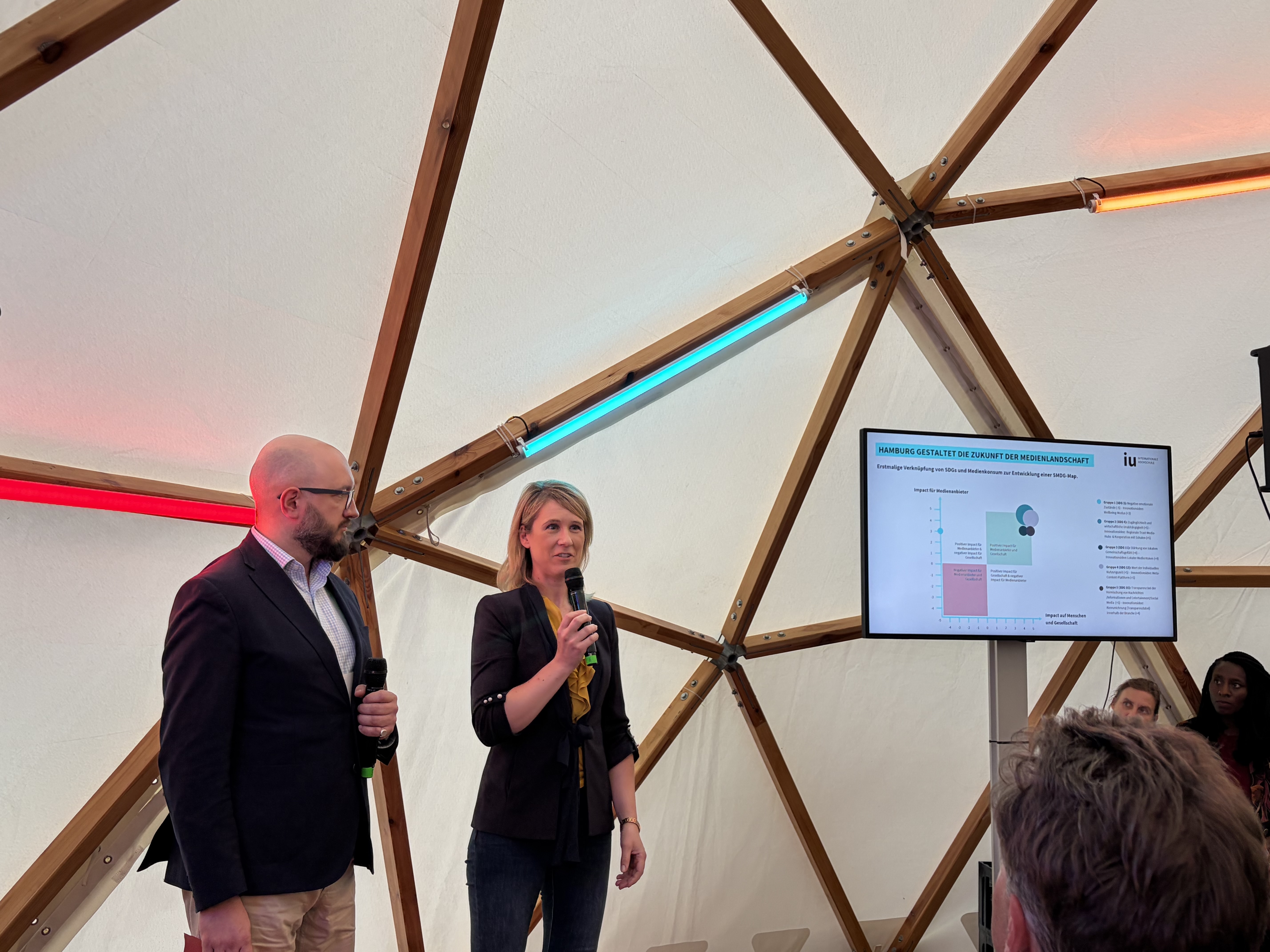
The central outcome of the workshop was the first-ever Sustainable Media Development Goals Map — a structured framework designed to help media users, policymakers, and businesses better understand the opportunities and risks of media consumption, and make more responsible decisions as a result.
As Prof. Dr. Wolter explained:
"We showed how sustainable aspects of media consumption can be a real source of value for media companies - by deriving concrete product and service innovations directly from media-specific SDGs. It is essential to make the economic impact that sustainability can generate visible and tangible."
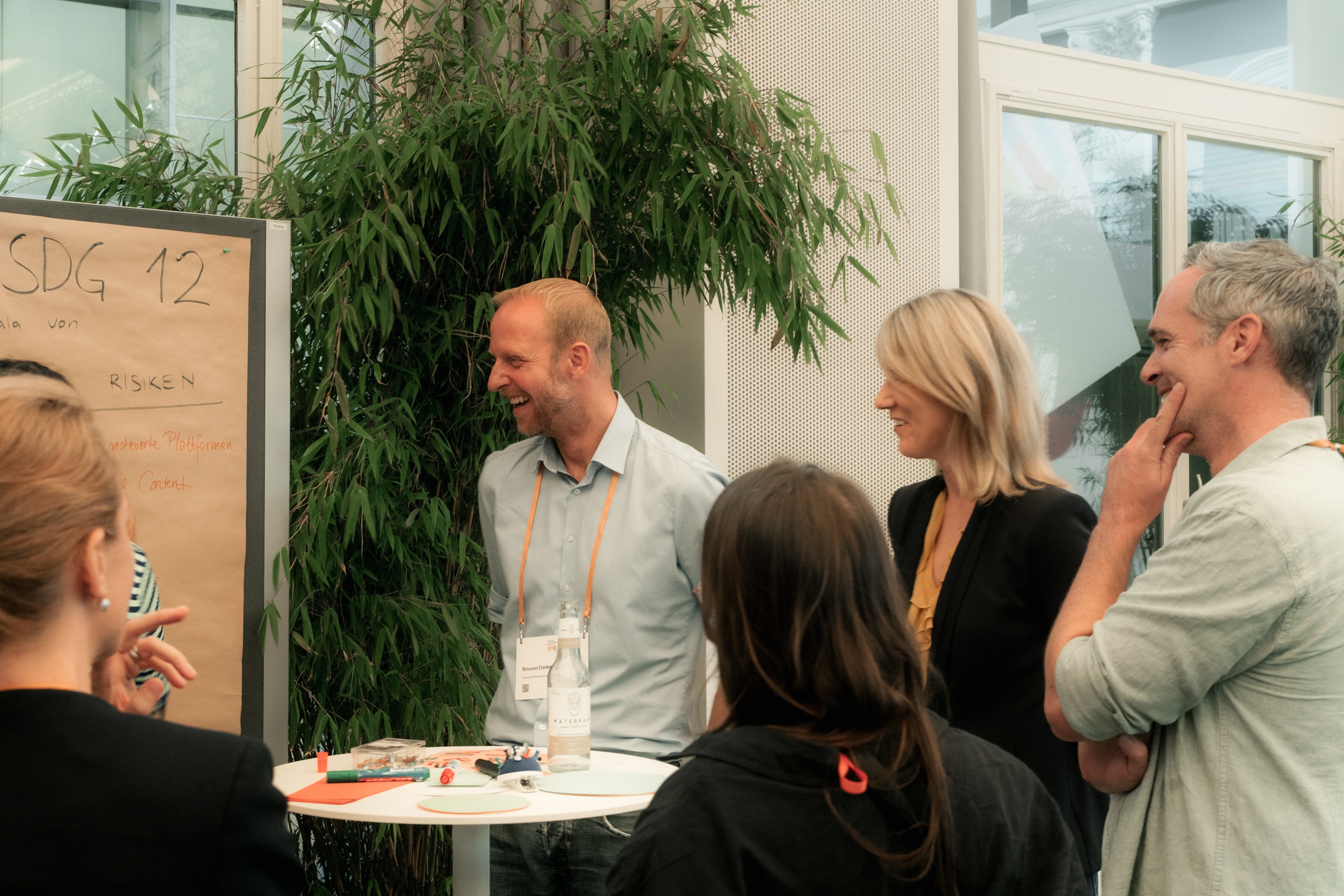
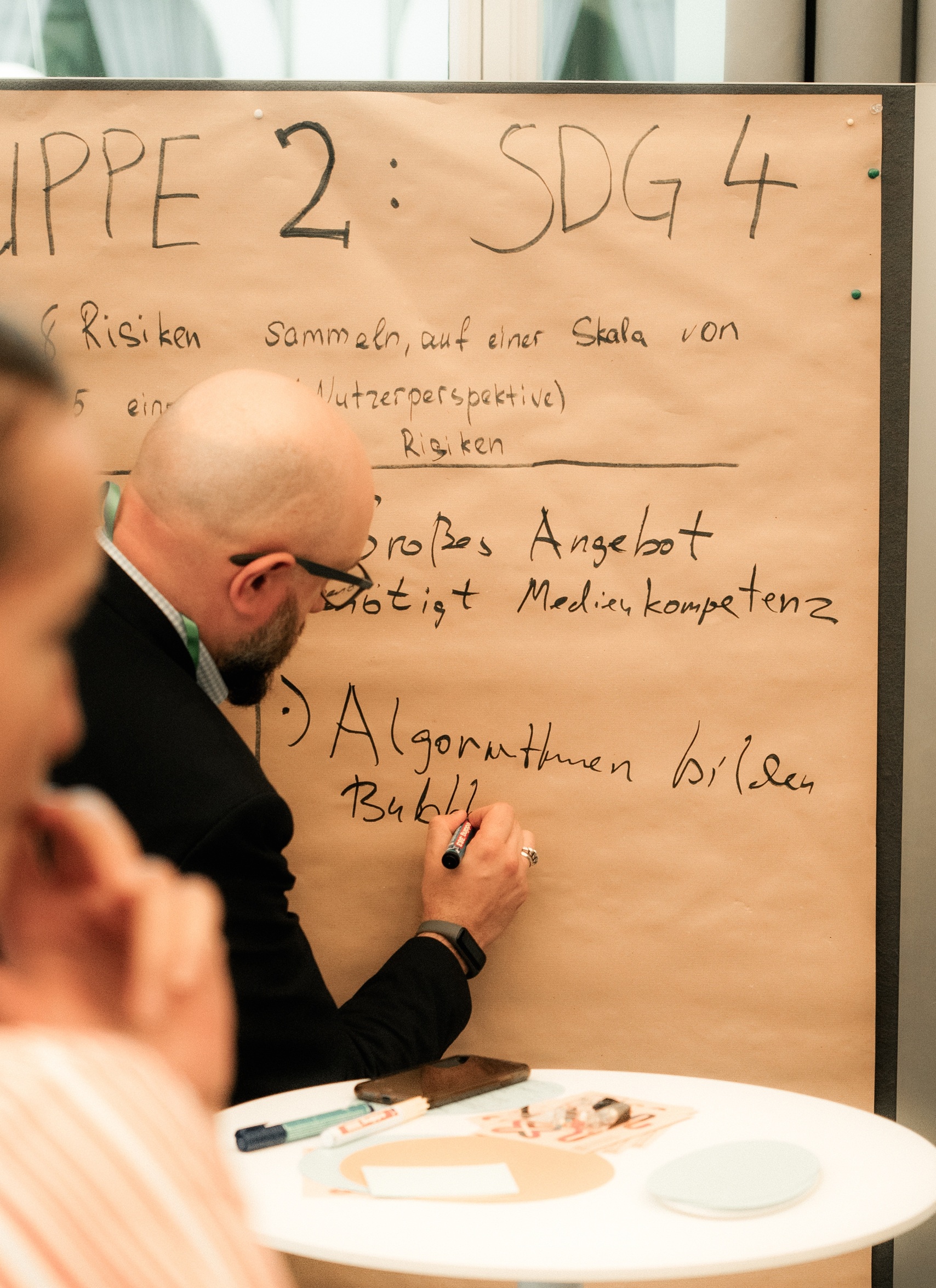
Amongst the six working groups, the team focused on SDG 4 – Quality Education developed one of the most immediately actionable proposals of the day - and IU, as a university, had a natural stake in getting it right.
The group's starting point was the observation that digital media today has an unparalleled capacity to amplify educational content. It reaches people across geographies, backgrounds, and life stages. Germany's public broadcasting system - structurally independent from advertising revenue — already provides a ready platform for content that genuinely serves the public good. The question was: how do you scale that potential deliberately?
The group's proposal: a cooperative network bringing together regional media outlets, advertisers, content creation specialists, and educational institutions, all united around a shared goal of producing high-quality educational content and distributing it through mainstream media channels.
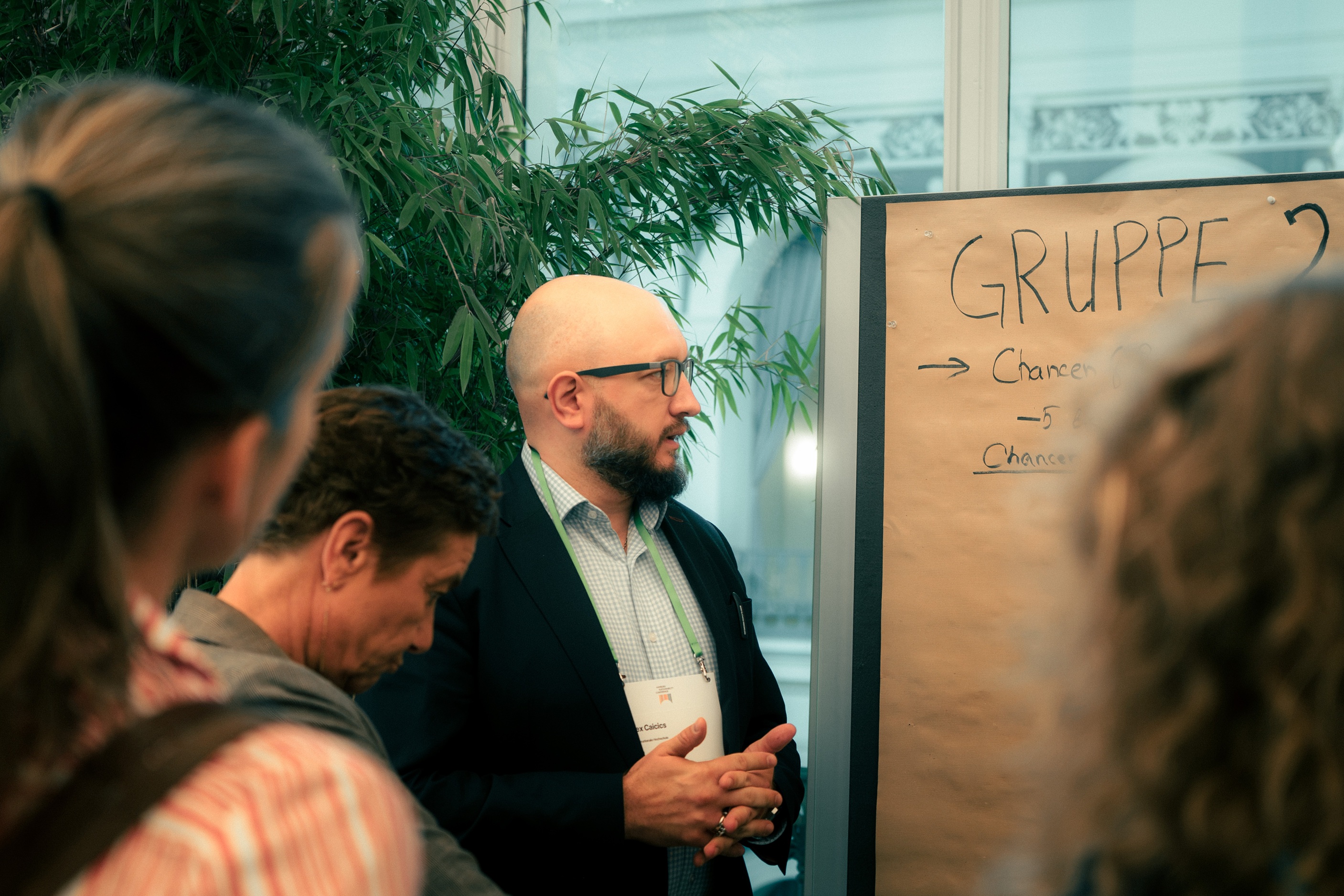
The financial model is designed to make participation attractive for all sides. Advertisers who contribute to a dedicated fund - created specifically to finance the production of educational content - would receive preferential advertising rates within the participating media network. In return, media outlets gain both sustainable funding and a clear, communicable mission. The whole network would operate under a shared brand identity, positioning its members as organisations committed to positive societal impact - a credible and increasingly valued signal for audiences, partners, and talent alike. It is a model that turns what is often framed as a cost (investing in public-interest content) into a strategic advantage.
The SDG 4 group was selected to present its project publicly on the same evening, at the Dome at the Zukunftsgarten Rathausmarkt - Hamburg's city hall square - as part of the Hamburg Sustainability Week programme. Seeing workshop outcomes reach a live public audience within hours of being developed is exactly the kind of science-to-practice transfer the IU RCSMM was built for.
The RCSMM researches and develops sustainable approaches to media and marketing management, providing the foundations for more responsible decision-making in media and communication practice.
The RCSMM was founded on the premise that sustainable media management requires both rigorous research and genuine engagement with practice. The Hamburg Sustainability Week offered both: a real-world challenge, a diverse group of practitioners, and an outcome — the Sustainable Media Development Goals Map — that will serve as a foundation for ongoing work on Good Media Governance and responsible marketing decisions.
The workshop also demonstrated that sustainability in media goes far beyond carbon footprints. It is about trust, diversity, media sovereignty, and the kind of information environment we collectively create and inhabit.
Alex Caicics, Head of Sustainability at IU, reflected on the occasion:
"At IU, making education accessible is our mission and the lens through which we make decisions. That is why SDG 4 resonates with us so deeply. We see digital media as one of the most powerful tools we have to democratise knowledge and reach people who traditional education has too often left behind. The work being done by the IU RCSMM puts us at the forefront of that conversation, bridging rigorous research with real-world impact. And what excites me most is that this is not just faculty work happening in the background. It is an opportunity for our students to engage directly with cutting-edge research on one of the defining questions of our time. That kind of hands-on, future-focused learning is what IU stands for."
Learn more: iu.de/forschung/projekte/research-center-for-sustainable-media-marketing

